
Is Alternative Construction Really Cheaper?
There are more ways to build today than there were a few decades ago. New materials, construction methods and technologies continue to emerge and evolve, giving developers and homeowners more options. However, as these alternatives become more popular, there is an increasing tendency to judge them primarily by how much money they can save. That is where the conversation needs to change.
Alternative construction technologies did not necessarily come in to make buildings cheaper. Many came about to solve specific construction challenges. Cost reduction was often a secondary benefit rather than the primary objective.
Take modular construction, for instance. Its biggest advantage is the ability to manufacture building components off-site while other site activities continue. This reduces construction time, improves coordination and makes it easier to dismantle, relocate or reassemble structures. The eventual savings in labour, time and project overheads can be significant. However, these benefits do not automatically translate into a cheaper building.
The same applies to sustainable construction materials. Working with locally available resources such as earth , timber and recycled materials is partly about reducing dependence on industrially manufactured materials. It is also about making use of what is already available. But processing, treatment, transportation, skilled labour and installation still come at a cost. Natural does not necessarily mean cheap.
What is cheap anyway? It has nothing to do with the final price but everything to do with your financial situation. And if you cannot afford a particular price, its better to accept the reality. The real question, therefore, is not whether an alternative is cheaper. It is whether it is better suited to the intended purpose and whether its lifetime cost makes economic sense.
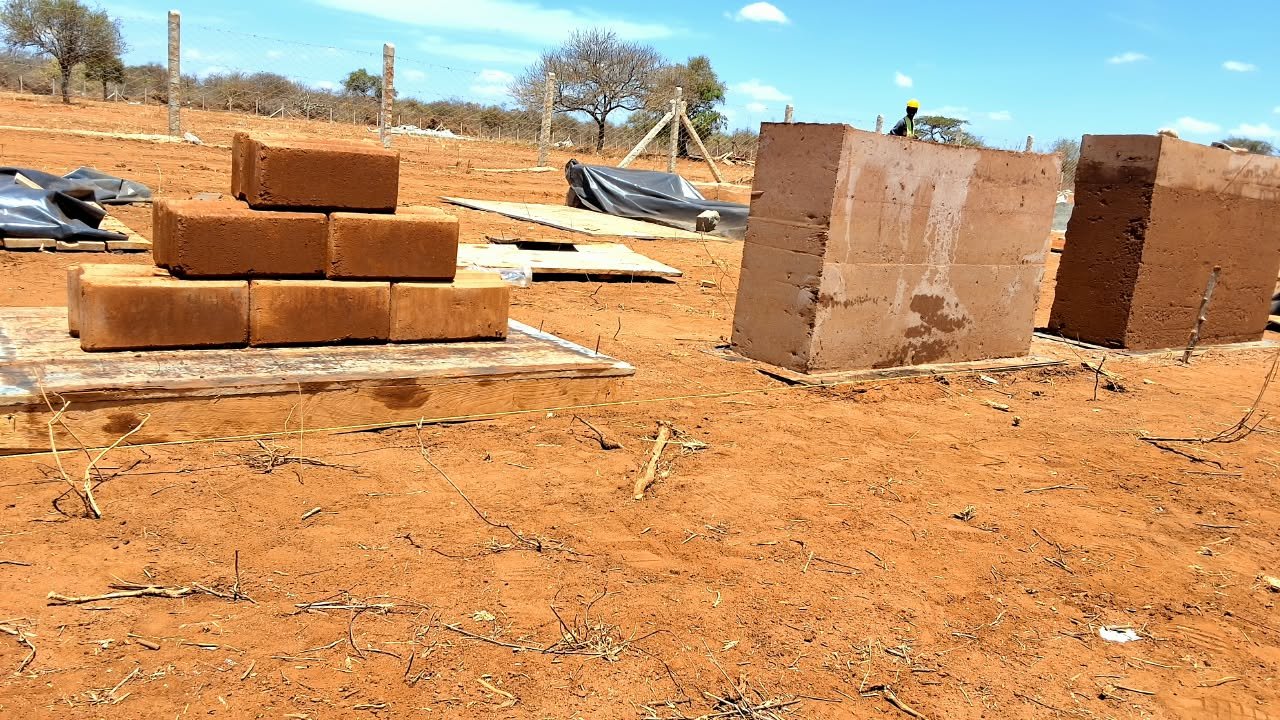
Consider rammed earth construction. One of its biggest attractions is the use of locally available soil, which can significantly reduce the cost of purchasing conventional walling materials. However, the initial investment can be higher than expected. Good rammed earth construction requires appropriate soil testing, mix design, formwork, compaction equipment and an experienced crew. The quality of workmanship directly influences the finished product. You cannot simply collect soil from your site, put it into formwork and expect an excellent building.
Once properly constructed, however, rammed earth walls can require very little maintenance. Their durability, thermal mass and ability to regulate indoor temperature can also contribute to long-term operational savings. This is where the initial cost needs to be considered alongside the cost of owning and maintaining the building.
Modular construction presents a different equation. A modular unit may be cheaper and faster to install upfront, particularly where standardised designs and components are used. However, the long-term cost depends on material quality, weather protection, insulation, corrosion resistance, connections and maintenance requirements. A poorly specified modular structure can become expensive to maintain, particularly in harsh environments.
People often assume that because containers are readily available and can be converted relatively quickly, they must be cheaper than conventional buildings. That is not always the case. The container itself may be affordable, but the cost of modifications, insulation, ventilation, structural reinforcement, corrosion protection, finishes and services can quickly add up. If the design requires extensive cutting, joining or stacking, much of the original cost advantage may disappear.
The mistake is assuming that the construction technology determines the final price. In reality, the design intent, specifications, location, workmanship and expectations of the end user have just as much influence.
A lifetime cost comparison must therefore look beyond the initial construction budget. It should consider the cost of design, materials, construction, operation, maintenance, repairs, replacement of components and eventual decommissioning.
There is also the question of how long the building is expected to serve its purpose. A temporary accommodation facility, a permanent family home and a commercial warehouse should not be evaluated using the same criteria. Spending more on a structure designed to last several generations may make sense. The same investment may be difficult to justify for a facility intended to operate for only five years.
In conclusion, alternative construction should not become a cost-cutting campaign at the expense of performance, durability and user satisfaction. There is little value in constructing a cheaper building that fails to meet the needs of its occupants or becomes expensive to maintain a few years later. Generating savings is a process and when not justified, its basically a shortcut.
The real question, therefore, is not whether an alternative is cheaper. It is whether it is better suited to the intended purpose and whether its lifetime cost makes economic sense.
For more information, reach out to us via info@rickfes.co.ke
At Rickfes Construction Ltd., we help developers, investors and private clients explore and implement construction methods such as rammed earth, modular construction and other sustainable building systems. We provide technical guidance on material suitability, construction methods, cost implications, performance and quality control, helping clients adopt alternative technologies that are appropriate for their projects and intended use.