
Building With Bamboo Tour in Bali, Indonesia
From 23rd April 2026 to 28th April 2026, our CEO was on a fact finding and benchmarking tour about building with bamboo in Bali-Indonesia, following an invitation from the builders Bamboo Pure and designers Ibuku Studio.
The tour started with a factory visit and concluded with a visit to the Green Village, home to some of the world’s finest bamboo-built residences and hospitality spaces that are already in active use. Bali is often perceived to be a generally a bamboo zone but its only concentrated at a certain region called Abiansemal.
A particularly interesting insight was the structure of the bamboo supply chain. Ibuku Studio serves as the designer, while Bamboo Pure is the builder. Bamboo supply is sourced externally by design, allowing growers and suppliers across the value chain to benefit economically, rather than builders owning plantations directly.
The visit offered a comprehensive learning experience on the entire bamboo value chain; from harvesting, treatment and curing, to its practical application in both construction and furniture making.
There are different varieties of bamboo, each with unique characteristics and ideal applications:
- Black Bamboo – Dark in colour and relatively rare, making it the most expensive variety. After treatment, it is priced at approximately $3 per metre. It is mostly used in luxury structures, decorative framing and premium finishes.
- Petung Bamboo (Asper) – The most common and widely used structural bamboo, priced at approximately $2 per metre after treatment. It grows steadily, straight, and thick, making it ideal for columns and beams. It also has strong fibres which, when split into slates, can be curved into the flowing architectural curves commonly seen in wavy-like roof shapes.
- Thorny Bamboo – Considered one of the strongest structural bamboo species, with excellent compressive strength. It is commonly used for heavy framing systems and its naturally twisted growth makes it particularly suitable for curved elements like spiral staircase.
- Tali Bamboo – Slimmer and lighter in profile. It is often flattened and woven to create panels, ceilings, screens, and interior finishes, making it highly suitable for indoor applications.
Generally, bamboo works best as an indoor material, away for exposure of too much water and sunlight. For the roof, on top of the slates of bamboo fibers, cladding is done using copper sheets which are still available locally.
Harvesting, Treatment and Curing Process
Once bamboo is harvested, node boring is done (the process of drilling through each node to create one continuous hollow cavity throughout the full length of the bamboo pole). This allows treatment chemicals to flow uniformly inside the bamboo.
The bamboo is then soaked in treatment troughs containing boric acid and borax, dissolved in hot water at approximately 90°C. After treatment, the bamboo is extracted and cured for at least one day. This treatment protects the bamboo from insects since bamboo is naturally sugary and attractive to pests and, interestingly, is also said to deter snakes. Snakes are common in the Abiansemal region but rarely enter treated bamboo houses.
After treatment, the bamboo is ready for use in either construction or furniture production. A single bamboo pole typically ranges between 8m and 25m in length, with diameters varying up to 150mm for larger species.
Bamboo in Furniture Making
For furniture, bamboo is primarily used for the supporting frame and general structure, while finished solid surfaces such as seating areas or tabletops are often made from compressed bamboo “chopsticks.”
These are thin bamboo sticks (those used for eating sushi) compressed together under high pressure to form strong, durable boards. Interestingly, all these chopsticks are recycled from discarded hotel waste, giving them a second life in furniture manufacturing.
For connections and fastening, neither nails nor screws are used. Only bamboo dowel pins and glue. Surface finish is sanding and varnishing just like wood.
You can check out some of the furniture below.
Visit to Green Village
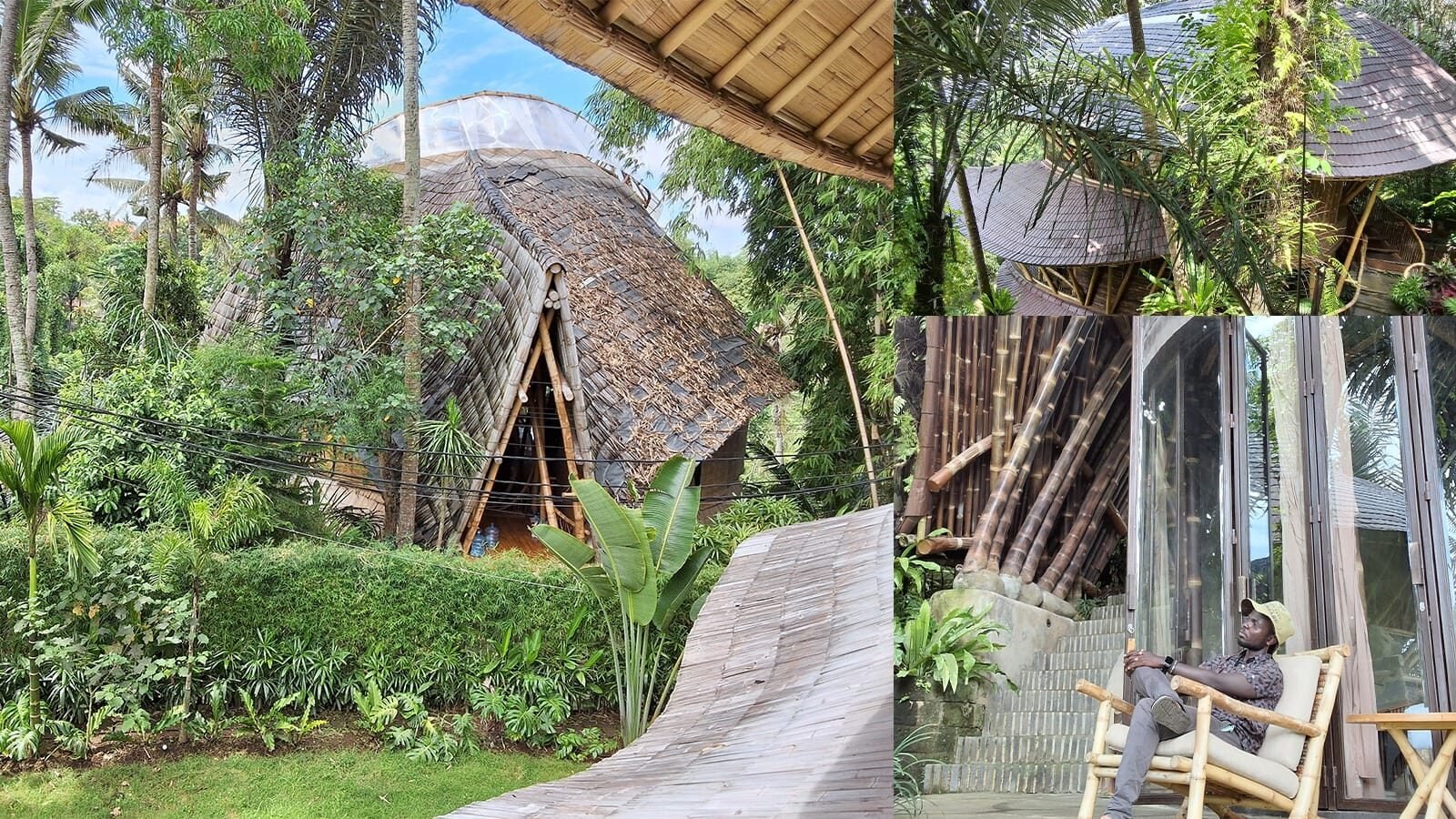
At Green Village, we were fascinated by the majestic bamboo structures built within the community.
It is a unique and reserved development zone where anyone can purchase land and build, provided that at least 50% of the structure is made from bamboo.
We were given a house tour to 2 beautifully designed homes, which were both 2 bedroom staycation residences averaging $150 – $300 per night, complete with private lounges, 100% bamboo furniture, expansive jungle views and immersive natural living experiences.
You can check the houses below. One made with a mix of the bamboo varieties while the other purely made of black bamboo which excellent views of the jungle.
Visit to Kul Kul Restaurant
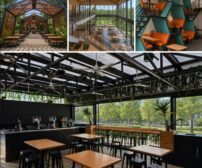
Finally made a stop over at the Kul Kul Restaurant built by Bamboo U , near the famous international Green School, and treated to an exquisite dinner experience. The restaurant structure, roof and furniture is made of 100% bamboo. You can even be served particular foods in bamboo splits as seen in the photos below.
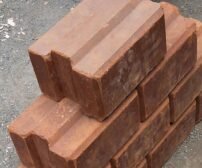
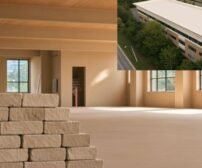
At Rickfes Construction Ltd, we have already been implementing various alternative building technologies, including rammed earth construction and Interlocking Stabilized Soil Blocks (ISSB). Bamboo has remained on our innovation radar for the past three years and given its availability in Kenya, we made deliberate efforts to learn directly from some of the best bamboo practitioners in the world.
We are glad to have captured relevant technical and practical insights and we are now in the process of developing proposals and product concepts to explore opportunities in bamboo construction here in Kenya
Any enthusiastic builder, developer, manufacturer or aspiring homeowner interested in this technology is welcome to partner/engage with us as we explore how bamboo can be best utilized.
As industry practitioners, our responsibility is to continue experimenting, sharing knowledge, and working collaboratively to turn these ambitions into practical solutions that benefit humanity and the environment around it.
Generally, bamboo works best as an indoor material, away for exposure of too much water and sunlight.
For more information, reach out to us via info@rickfes.co.ke
At Rickfes Construction Ltd., we remain committed to partnering with like-minded organizations to help shape a more sustainable built environment and to actively contribute to conversations and practical solutions that move the sector forward.