
The True Cost of Building With Rammed Earth
Rammed earth is increasingly attracting attention as an alternative building technology in Kenya. Its natural appearance, thermal performance and use of locally available soil make it appealing to developers looking for a different approach to conventional construction.
However, how much does it actually cost to build with rammed earth? The answer is not simply a price per square metre. The true cost of rammed earth depends on several factors, beginning with one of the most important: the soil available on the site.
Rammed earth is not simply soil placed into formwork and compacted. The soil must have a suitable grading and composition for the intended application. Depending on what is available on site, it may require screening, blending with other soils or the addition of a stabiliser. The mix design therefore determines part of the material cost.
Where suitable soil is readily available on site, the cost of importing material can be reduced. Where the existing soil is unsuitable, such as black cotton soil, everything may need to be imported. The stabiliser and its proportion will also depend on the soil characteristics and the performance required from the wall. This is why proper soil assessment should form part of the early planning of a rammed earth project.
Formwork Is Also Part of the Cost
The quality of the finished wall is heavily influenced by the formwork. Rammed earth requires strong and stable forms capable of resisting the pressure generated during compaction.
The choice between basic wood formwork and more advanced plastic or steel systems affects both the initial cost and the speed of construction. Reusable formwork can also provide value over multiple projects.
Expertise, Labour and Equipment Matter
Rammed earth is labour-intensive and workmanship matters. Equipment can be manual (using a tamper) or mechanical (using a rammer).
For best workmanship and consistency, a combination of a pneumatic rammer with an external compressor and steel formwork should be the priority. The work is also done by a specific crew to control the level of turnover that may affect output.
The soil must be prepared correctly, moisture controlled, placed in appropriate layers and compacted adequately to achieve the required density, strength, durability and appearance.
Finishes
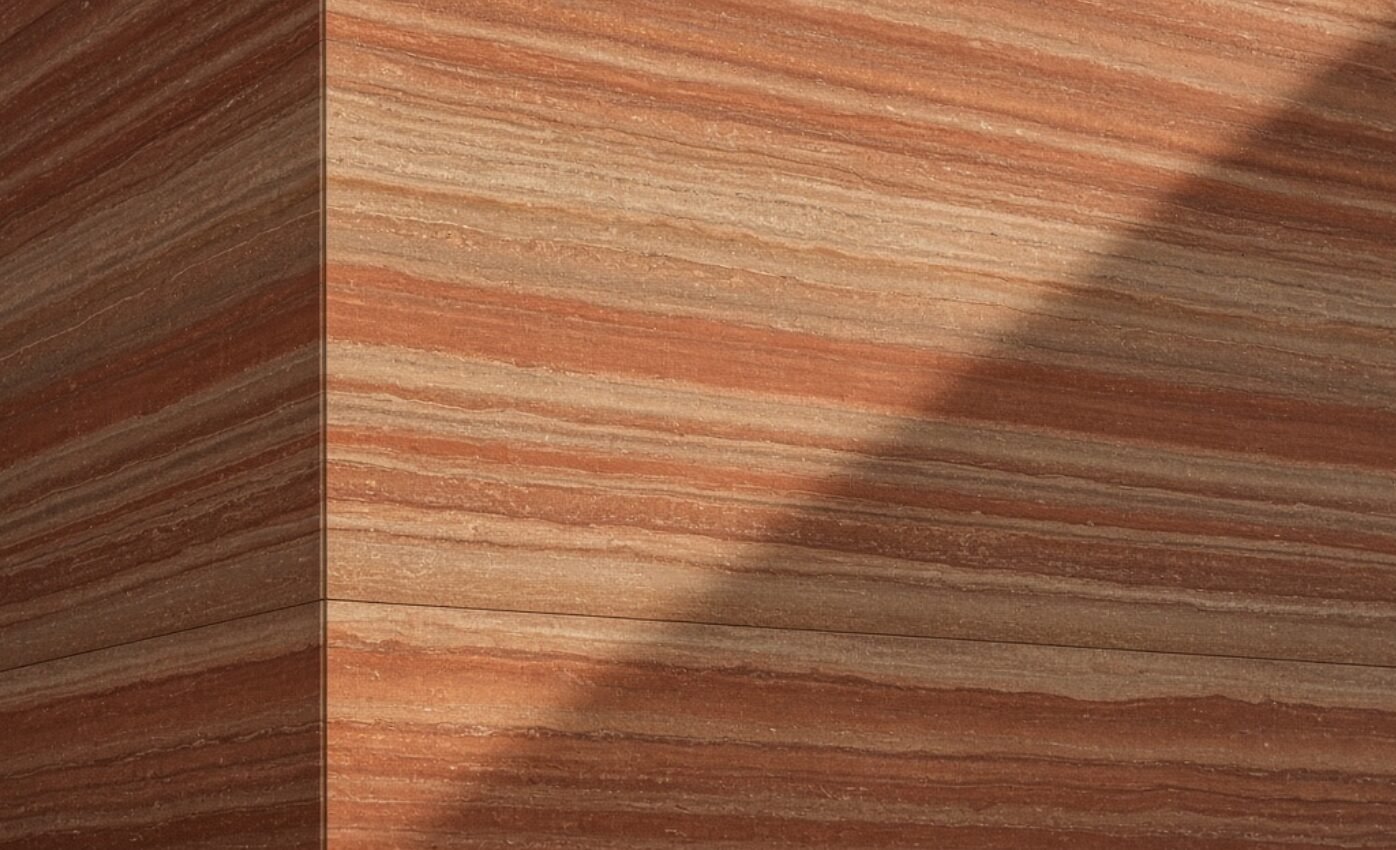
On finishing, the wall appears as the final finish. After curing, only dust proofing is done using a special-purpose paint. Unlike conventional masonry, which may require plastering, skim coats and painting, a well-executed rammed earth wall can deliberately be left exposed.
This reduces the need for multiple finishing layers and gives the building a natural character that can remain attractive over many years.
Thermal Performance As A Cost Benefit
Rammed earth also brings thermal mass into the building. Dense earth walls can absorb and store heat and release it gradually, helping moderate internal temperature fluctuations and reduce dependency on mechanical systems.
The level of performance depends on the building’s design, orientation, openings, roof, insulation, ventilation and local climate. Rammed earth should therefore not automatically be treated as a substitute for good passive design.
The true cost of rammed earth should be considered across the whole life of the building, rather than only at the point of construction. The debate on being cheap or expensive needs to accommodate the understanding of its sustainability impact and long-term performance.
In conclusion, rammed earth is not automatically the cheapest construction method in every situation, nor should it be marketed as one. Its value depends on the availability and suitability of soil, soil testing and mix development, stabiliser requirements, formwork, skilled labour, construction speed, reduced finishing requirements, thermal performance and long-term maintenance.
Rammed earth is not simply soil placed into formwork and compacted. The soil must have a suitable grading and composition for the intended application.
For more information, reach out to us via info@rickfes.co.ke
At Rickfes Construction Ltd., we help clients assess and implement alternative construction methods such as rammed earth, based on their technical suitability, cost, performance and long-term value and thereafter implement.