

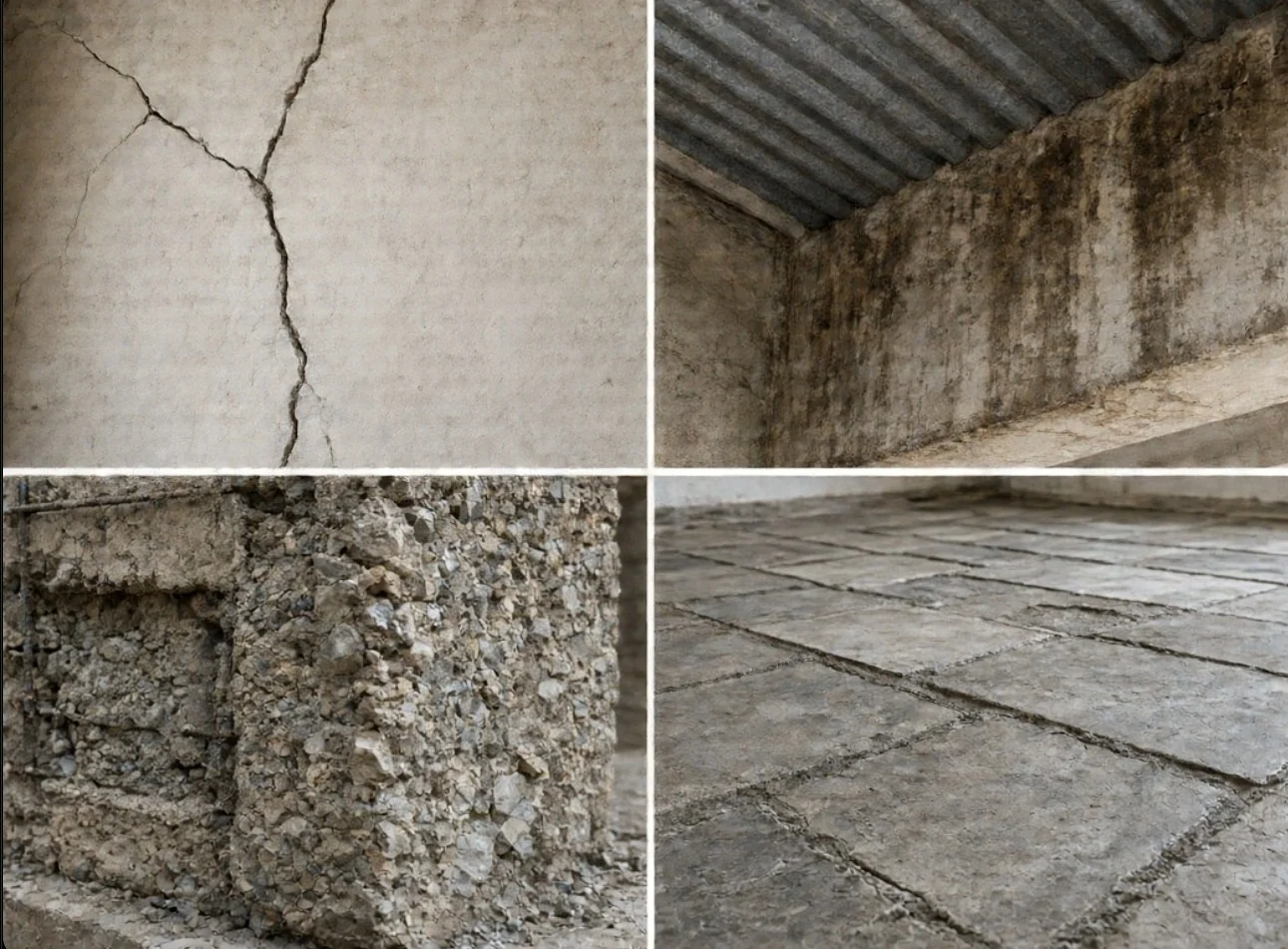
Who To Hold Responsible For Construction Defects
When it comes to construction, we often underestimate the value of on-site supervision. This leaves the client exposed to defects which can easily turn into a lifelong expense.
There are two major categories of defects: latent defects and patent defects. This applies whether you are building a house or purchasing a ready property. A patent defect is one that you can easily see during inspection, for example, a crack in a wall or a leaking roof. A latent defect, on the other hand, is usually hidden and not discoverable during a normal inspection. For instance, you cannot easily tell the diameter or quality of reinforcement bars used inside columns after the concrete has been cast.
If building a house, you can largely avoid both through thorough supervision. If buying, you may be able to identify patent defects through proper inspection, but latent defects are much more difficult to establish before purchase. This is why proper due diligence and professional inspection are important before committing to a property.
Who is to be held responsible?
Most of the time defects are pointed to the contractor, mainly because they are responsible for the physical execution of the works and usually have a defect liability period of not less than six months, or whatever the contract provides.
However, this is not always the case. Building a house is not a one-man show. Responsibility depends on who failed to fulfil their contractual or professional obligations. A defect can originate from:
- Erroneous design or detailing.
- Defective or unsuitable materials.
- Unapproved changes during construction.
- Poor workmanship.
- Incorrect instructions issued by the client.
- Poor maintenance after occupation.
The contractor is generally responsible for workmanship and, depending on the contract, the materials used in the works as sourced by himself. If responsible, defects are rectified at their own cost subject to the contract and the circumstances of the defect.
The designers, particularly the Architect and Engineer, are responsible for providing the building specifications, drawings and technical details within their respective scope. If something is incorrectly specified or designed and the contractor constructs it according to the approved information, the contractor may have grounds to argue that the defect originated from the design rather than the execution.
For you as the client, you can also be liable.
For example, a client may issue instructions that have not been reviewed or approved by the consultants. If such changes compromise the design or construction quality, they can eventually contribute to defects.
Defects can also arise after occupation because of poor maintenance. Not every problem discovered in a building is necessarily a construction defect. This is why determining responsibility requires looking at what happened, who was responsible for that stage and what the contract or professional appointment required them to do.
This is why it is always important to conduct snagging immediately after completion and before final acceptance where applicable. This also applies when buying a ready house where you will be dealing with the developer. A professional inspection should also be undertaken before completing the purchase so that visible defects can be identified early.
In conclusion, best way to deal with construction defects is to prevent them from occurring in the first place. Having the right professional oversight is key, from start to handover.
Defects can also arise after occupation because of poor maintenance. Not every problem discovered in a building is necessarily a construction defect.
For more information, reach out to us via info@rickfes.co.ke
At Rickfes Construction , construction management and project supervision form part of our services. We help clients coordinate the construction process, monitor quality and identify issues before they become expensive defects. his is particularly important for clients building remotely or those who may not have the technical capacity to monitor the works themselves.