

Why Construction Management is an Independent Role
Construction Management has increasingly been mischaracterized as a subsidiary role under design or contracting professions. In reality, it is an independent professional discipline that must be treated as a distinct site-based responsibility.
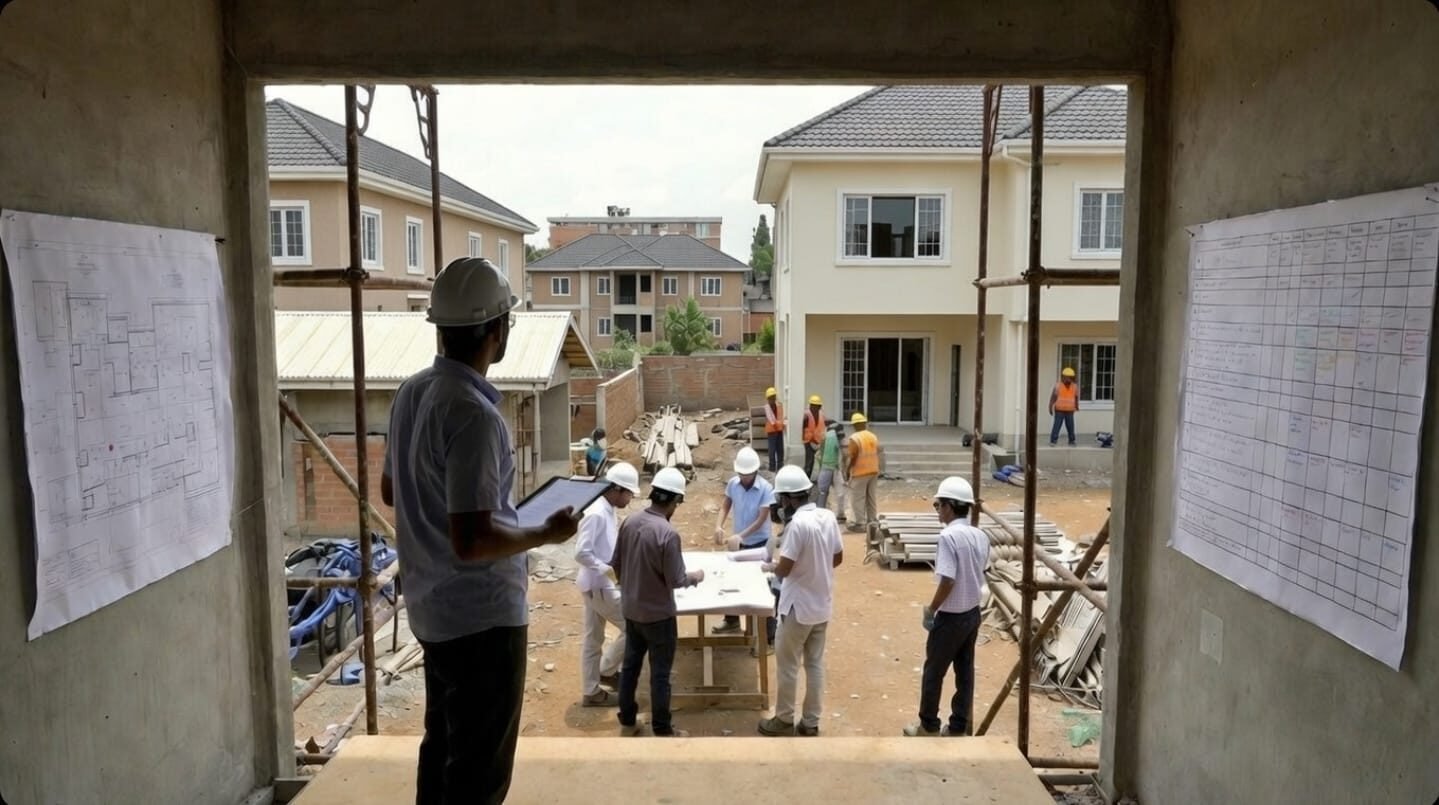
Construction Management is not a shared role. It must be assigned to one accountable professional with authority on site. It is an autonomous function focused on managing the construction process rather than designing, pricing or physically building the works.
The key responsibility of a Construction Manager is to integrate time, cost, quality and scope throughout the construction phase. While Architects and Engineers concentrate on design, quantity surveyors focus on cost and contractors focus on building, the Construction Manager is responsible for how all these elements amalgamate and synchronize during execution.
Site inspections conducted by the other consultants do not replace construction supervision. Their inspections are technical in nature and meant to protect the design intent. Construction Management complements this by coordinating daily operations and ensuring that work progresses systematically and efficiently.
Sequencing activities, managing task dependencies and controlling site risks are central to the Construction Manager’s role. Without this coordination, delays, clashes and inefficiencies become inevitable.
Lack of autonomy on site creates conflicts of interest. If a Contractor solely manages the site, building methodologies become biased. If an Architect controls the site, decisions may overly favor specifications. The Construction Manager provides balance by ensuring that cost, quality, and time are aligned and that delivery remains objective and to satisfaction of the client.
This does not mean that the Construction Manager replaces other professionals. Instead, they complement them through synchronization of activities, ensuring that each specialist’s work fits into the overall construction process. Their full-time presence on site allows for continuous monitoring and immediate corrective action when issues arise.
In conclusion, construction management is a complete profession with a specialized body of knowledge, a defined scope of practice, ethical responsibility, accountability and independent judgment. As other professionals produce designs, quantities e.t.c construction managers control how these outputs are coordinated and delivered on site.
It is an autonomous function focused on managing the construction process rather than designing, pricing or physically building the works.
For more information, reach out to us via info@rickfes.co.ke
At Rickfes Construction Ltd, we are keen to receive and facilitate investors; local or international; seeking to establish their developments into this SEZ. Our role is to be your development partner, liaison and local representative on the ground while in setting up in this SEZ.